



Ensuring the health and safety of building users
Healthy and safe living conditions are at the top of many peoples’ minds. Humans spend on average 60-90% of their life in indoor environments, which is why the importance of healthy buildings is crucial. This trend will only become more emphasised as our population ages, increasing health risks related to indoor air pollution. Indoor air quality is of vital importance, especially for vulnerable groups such as children and elderly people.
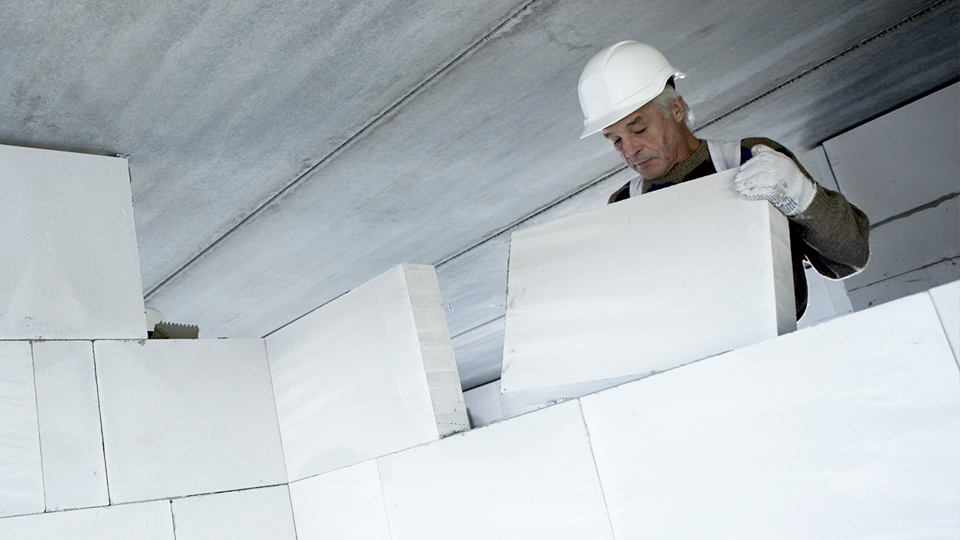
The specific qualities of AAC products make them among the most appropriate building materials for good indoor air quality. AAC prevents heat losses, condensation, and improper ventilation inside the building envelope. Its non-organic composition reduces the risk of developing allergies and prevents mold, rodents or other pests from affecting the building.
Manufactured from widely available natural raw materials
AAC has excellent thermal and noise insulation, high resistance to rain penetration, is not combustible and heat resistant, providing added protection to building users.
AAC is moreover one of the safest building materials available to consumers. It is manufactured from widely available natural raw materials (lime, sand or other minerals, cement and water) and does not contain any toxic substances, such as chemicals or volatile compounds, that could harm residents or workers. The manufacturing process emits no pollutants and creates no by-products or toxic waste products. This makes AAC a healthy and safe building material.
Do you want to become a member of EAACA? Contact us!
News

EAACA Practical Guide EPD
Just published: How to Read an EPD and Use It for a Building LCA Building Life Cycle Assessment is becoming a practical reality – and

EAACA Tool heat wave
New EAACA Tool “AAC heat-wave” released: Building in summer – what actually matters? Recent summer heat periods have made one thing clear: buildings need to

Call for Abstracts: ICAAC 2027 in Istanbul
The European Autoclaved Aerated Concrete Association (EAACA) invites researchers, industry experts, engineers and students to submit abstracts for the 8th International Conference on Autoclaved Aerated